
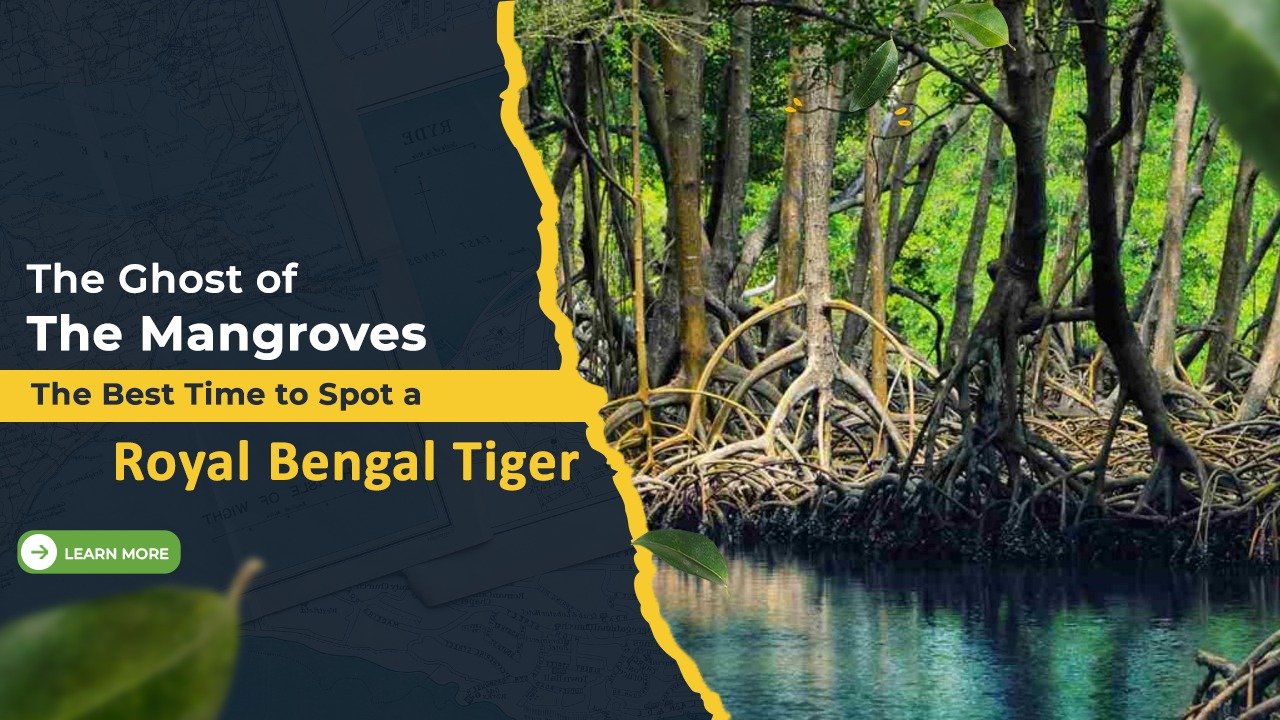
Spotting a wild Royal Bengal Tiger in the dense, tangled mangrove forests of the Sundarbans isn’t like a casual drive through a safari park. It’s a waiting game. A thrilling, pin-drop-silent, edge-of-your-seat kind of waiting game.
The tigers here are legendary. They swim, they adapt, and they are incredibly elusive—often called the “ghosts of the forest.”
Here at Banalata Travels, we guide hundreds of wildlife enthusiasts through these waterways every year, and hands down, the number one question we get asked is: “When exactly should I book my trip to actually see one?”
Let me be completely straight with you. Spotting a tiger out here in the Sundarbans? It’s tough. People usually expect a standard wildlife park where you just roll up in a jeep and snap a photo. But that’s not how it works here. This place is just endless water and thick mangrove trees. The cats here have to fight to survive. They swim across rivers, drag themselves through deep mud, and honestly, they vanish before you even realize you’re looking at one.
We’ve been running boat tours at Banalata Travels for a long time, across all seasons. And without fail, the very first thing everyone asks when they call us is: “When should I actually come to see a tiger?”
Hoping to just get lucky usually leads to disappointment. If you’re serious about seeing one, you have to nail down three things: the month, the clock, and the water levels. The tide is the biggest deal. Whenever folks book with us, this is the exact advice we give them to pick their dates.
Why Winter is Your Best Bet
If you hate sweating, late November to February is your window. The weather is actually pretty great during this time. Plus, the water gets freezing. Tigers hate the cold just as much as we do, so they crawl out of the shadows to soak up the sun. January is our favorite month for this. We’ve seen massive males just sprawled out on the riverbanks out in the open, trying to get warm.
The Tide Changes Everything
Most wildlife safaris care about whether it’s morning or evening. Down here, it’s all about the tide. High tide is useless because the water covers the tree roots. A tiger could be sitting ten feet away and you’d never know.
Low tide is when the action happens. The water pulls back and leaves these massive, slippery mudbanks. The tigers use these open areas to walk around or dig for food. Our boat captains literally map the whole day around these tidal changes. We follow the water, not the clock.
Mornings vs. Afternoons
If you manage to get a low tide early in the morning—we’re talking right at dawn—keep your eyes peeled. The mist is usually sitting on the water, and the cats are often getting a drink after hunting all night.
The other good window is late afternoon. Once the midday heat finally drops, the forest gets loud. Deer start barking, birds go crazy, and the tigers wake up from sleeping all day to start moving again.
The Summer Heatwave (April to June)
Look, I won’t sugarcoat it. April through June is brutally hot in Bengal. Most casual tourists can’t handle the humidity and just stay home.
But serious wildlife photographers actually love this time of year. Because it’s so hot, the little water puddles deep inside the forest dry up completely. The tigers have absolutely no choice but to come down to the main rivers to drink. You’ll be sweating buckets on the boat, but you’ll know exactly where to wait for them.
The Bottom Line
Nothing is guaranteed when you’re dealing with wild animals. But if you want the best possible shot at seeing the King of the Mangroves: pick a winter month, watch the low tide like a hawk, and focus on early mornings or late afternoons.
Whenever you decide to make the trip, hit us up at Banalata Travels. We know these rivers like the back of our hands, and we know exactly where to wait.