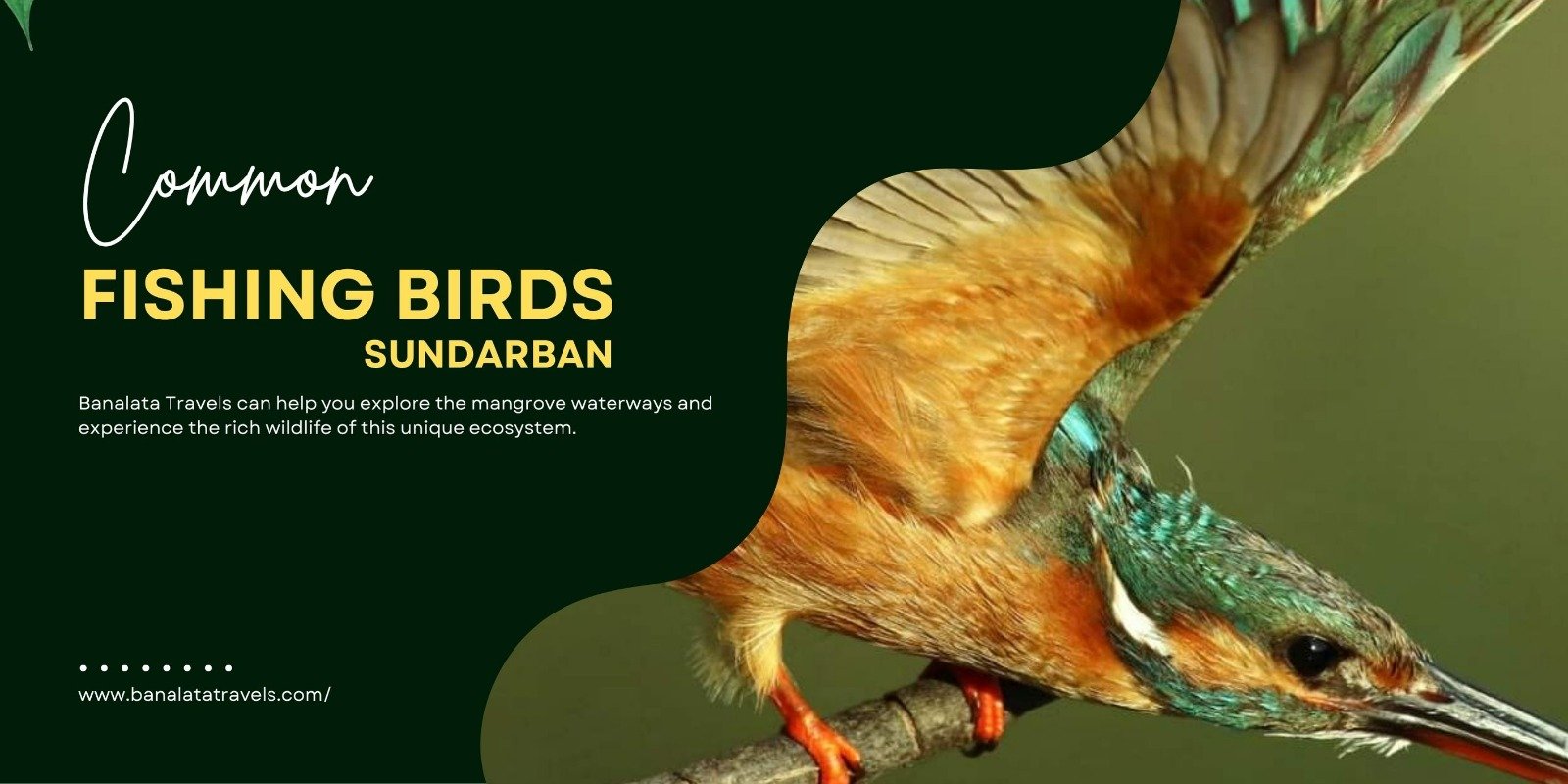
The Sundarbans is famous for its mangrove forests, tidal rivers and rich wildlife. Beyond the Royal Bengal Tiger, the region is also a wonderful destination for birdwatchers. As your boat moves quietly through the creeks and waterways, colourful kingfishers and other fish-eating birds can often be spotted perched on branches, flying across the water or waiting patiently for prey.
The Sundarbans has records of several kingfisher species, including Common Kingfisher, Brown-winged Kingfisher, Black-capped Kingfisher and Pied Kingfisher.
For nature lovers and wildlife photographers, a Sundarban trip with Banalata Travels can be a memorable opportunity to experience these birds in their natural mangrove habitat.
List of Fishing Birds You Can Commonly See on a Sundarban Trip
1. Lesser Adjutant
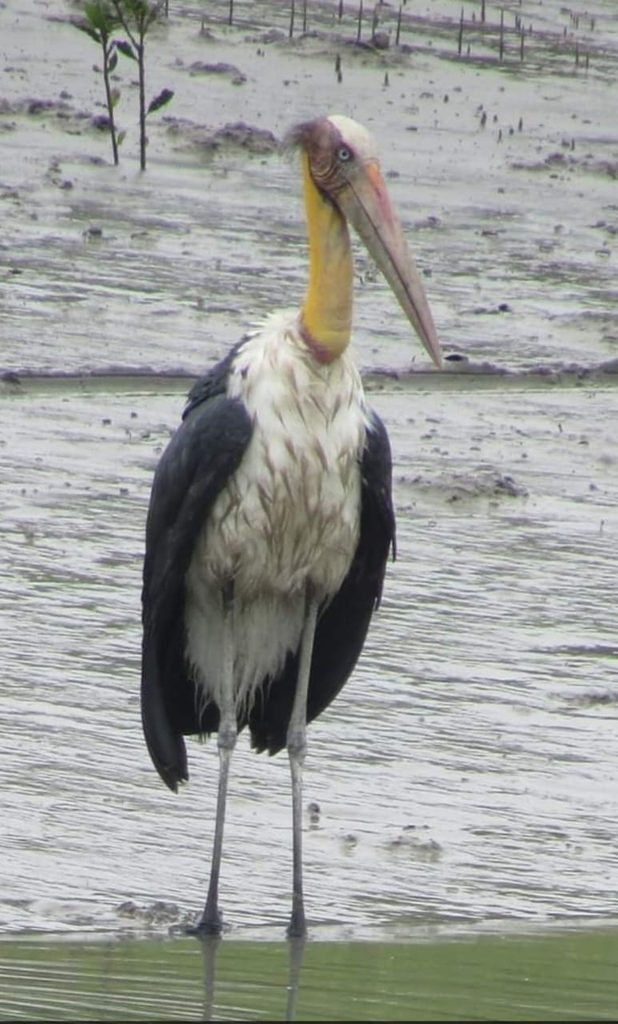
The Lesser Adjutant is a large and impressive stork that can sometimes be spotted around the wetlands, mudflats, and open areas of the Sundarbans. It has a distinctive bare head and neck, long legs, and a strong bill that helps it search for food. During a boat safari, visitors may see this bird walking slowly along muddy banks or shallow water while looking for fish, frogs, crabs, insects, and other small animals. Its tall appearance makes it easier to recognize from a distance.
The Lesser Adjutant is an interesting bird for wildlife photographers because its unusual appearance stands out against the green mangrove landscape. Keep binoculars ready when your boat passes through quiet creeks and open mudflats, as these areas can provide good opportunities for observation.
2. Asian Openbill
The Asian Openbill is one of the distinctive storks that birdwatchers may encounter around wetlands and waterways near the Sundarbans. Its most recognizable feature is the noticeable gap between the upper and lower parts of its bill, which gives the bird its common name. The species spends considerable time searching in shallow water and muddy areas for food. It mainly feeds on aquatic prey, especially snails, but may also take other small creatures. During a Sundarban boat trip, look for these birds near wetland edges, open mudflats, and areas where water levels are low. Their pale body and dark wings can make them relatively easy to notice when they are standing in open areas. Watching an Asian Openbill feeding naturally can add an interesting birdwatching experience to your wildlife journey.
3. Little Egret
The Little Egret is a graceful white heron and a fascinating bird to watch during a Sundarban safari. It is often found beside shallow creeks, tidal channels, muddy banks, and other wet areas where small fish and aquatic animals are available. With its slender body, long legs, and pointed bill, it is specially adapted for hunting in shallow water. The bird may stand quietly for several moments, carefully watching the water before making a quick movement to catch a fish. It can also feed on small crustaceans, frogs, and insects. Its bright white plumage is especially noticeable against the darker green mangroves. If your boat moves slowly through narrow waterways, watch the edges carefully because Little Egrets may be standing close to the waterline and feeding independently.
4. Great Egret
The Great Egret is one of the most striking white waterbirds you may see during a Sundarban trip. It has a tall, elegant body, long legs, a long neck, and a sharp pointed bill that is perfectly suited to catching aquatic prey. Great Egrets often stand almost motionless in shallow water while watching for fish. When the right opportunity appears, the bird quickly extends its neck and bill to capture its prey. It may also eat frogs, crustaceans, and other small aquatic animals. The contrast between its pure white feathers and the green mangrove surroundings makes it an attractive subject for photography. During a boat safari, check shallow creeks, mudflats, and quiet water channels for this impressive hunter.
5. Grey Heron
The Grey Heron is a large, long-legged waterbird that can be an exciting sight along Sundarban waterways. Its grey plumage, long neck, and strong pointed bill give it a distinctive appearance. This bird is a patient hunter and often remains still beside a creek or tidal channel while waiting for an opportunity to catch fish. When prey comes within reach, it can make a surprisingly fast strike with its bill. Grey Herons may also feed on frogs, crabs, and other small aquatic animals. Their preference for shallow water and open muddy edges means they can sometimes be spotted from a moving safari boat. Look carefully along exposed banks and quiet channels, particularly when the boat is moving slowly and the surroundings are peaceful.
6. Purple Heron
The Purple Heron is a beautiful waterbird with a darker reddish-brown and grey appearance that helps it blend into vegetation around wetlands. In the Sundarbans, it may be observed near mangrove edges, shallow waterways, and areas with dense aquatic vegetation. Like other herons, it is a patient hunter and can remain still for a considerable time before making a sudden move toward its prey. Its diet includes fish, frogs, crustaceans, and other small aquatic animals. Because its plumage can blend with branches and vegetation, spotting one often requires careful observation. Birdwatchers should scan the edges of creeks rather than looking only at open water. A quiet boat and a good pair of binoculars can make it much easier to appreciate this beautiful bird in its natural environment.
7. Indian Pond Heron
The Indian Pond Heron is a small and adaptable waterbird that can be seen around shallow water, muddy banks, wetlands, and areas close to human activity. Its brownish and streaked appearance provides excellent camouflage when it is standing still, so visitors may initially overlook it. When disturbed, however, it can suddenly fly up and reveal much brighter wings, making identification easier. It searches around shallow water for fish, frogs, insects, crustaceans, and other small prey. During a Sundarban boat trip, watch carefully along muddy edges and quiet channels where the bird may stand motionless while hunting. Its ability to blend into the surroundings is part of what makes spotting an Indian Pond Heron an enjoyable challenge for beginner and experienced birdwatchers alike.
8. Black-crowned Night Heron
The Black-crowned Night Heron is a compact heron with a distinctive dark crown and a sturdy body. As its name suggests, it is especially active around dusk and during nighttime, although it can also be encountered during daylight hours. It prefers wet habitats and may rest quietly among vegetation during the day. When feeding, it looks for fish, frogs, crustaceans, insects, and other small aquatic prey. On a Sundarban trip, visitors who spend time near waterways during the quieter parts of the day may have an opportunity to observe this interesting species. Its patient hunting behavior and contrasting plumage make it a rewarding bird for photographers and wildlife enthusiasts. Keep noise low and watch shaded areas along creeks where a bird may be resting.
9. Little Cormorant
The Little Cormorant is a highly skilled aquatic hunter and one of the birds that can be interesting to watch around Sundarban waterways. Unlike herons that usually hunt while standing in shallow water, cormorants often dive beneath the surface to pursue fish. After swimming underwater, the bird may return to a branch, exposed trunk, or other perch to rest. Visitors may also see it spreading its wings, a familiar behavior after feeding in the water. Its dark body can sometimes be difficult to notice against mangrove vegetation, so watch carefully around exposed branches and quiet channels. Seeing a Little Cormorant dive, disappear underwater, and then emerge farther away is a memorable part of observing the active birdlife of the Sundarbans.
10. Indian Cormorant
The Indian Cormorant is another excellent fish-hunting bird that can be observed around waterways and wetlands associated with the Sundarbans. It has a streamlined body and strong feet that help it swim and chase fish underwater. Rather than waiting patiently beside the water like a heron, the cormorant actively enters the water and dives after its prey. During a boat safari, you may notice one swimming on the surface before it suddenly disappears underwater. After feeding, it may sit on a branch or exposed structure to rest and dry its feathers. Watching these repeated dives can give visitors a closer appreciation of how birds have adapted to life around tidal and aquatic environments.
11. Oriental Darter
The Oriental Darter is one of the most unusual-looking waterbirds you may encounter during a Sundarban wildlife trip. It is often called the Snakebird because, when it swims with most of its body underwater, its long slender neck can resemble a snake moving through the water. This bird is an accomplished underwater hunter and uses its sharp bill to catch fish. After swimming or diving, it may climb onto a branch and spread its wings to dry. These behaviors make it particularly interesting to observe and photograph. During a boat safari, keep an eye on calm waterways, exposed branches, and areas where birds gather near the water. A sighting of an Oriental Darter can be one of the memorable moments of a Sundarban birdwatching experience.
12. Brahminy Kite
The Brahminy Kite is one of the most recognizable birds of the coastal landscape and is a wonderful sight above Sundarban waterways. Its bright white head and chestnut-brown body create a striking combination that makes identification relatively easy. The kite can often be seen soaring over creeks, rivers, mudflats, and mangrove forests while searching for food. Fish are an important part of its diet, although it may also feed on other available prey or carrion. During a boat safari, look upward as well as toward the water because these birds may circle high above the boat before gliding lower. Seeing a Brahminy Kite flying over the mangroves adds another exciting dimension to the Sundarbans wildlife experience.
13. Osprey
The Osprey is one of the most fascinating fish-eating birds that birdwatchers hope to see around coastal wetlands. It is specially adapted for catching fish, with powerful talons and feet designed to grip slippery prey. An osprey may circle over the water while searching for a suitable fish and then make a dramatic plunge toward the surface. A successful fishing attempt can happen very quickly, so keeping a camera ready is useful for wildlife photographers. During a Sundarban boat trip, watch open stretches of water and exposed branches where an osprey may perch or hunt. Even if you see one only briefly, its distinctive hunting technique can become one of the highlights of your birdwatching adventure.
14. Black-capped Kingfisher
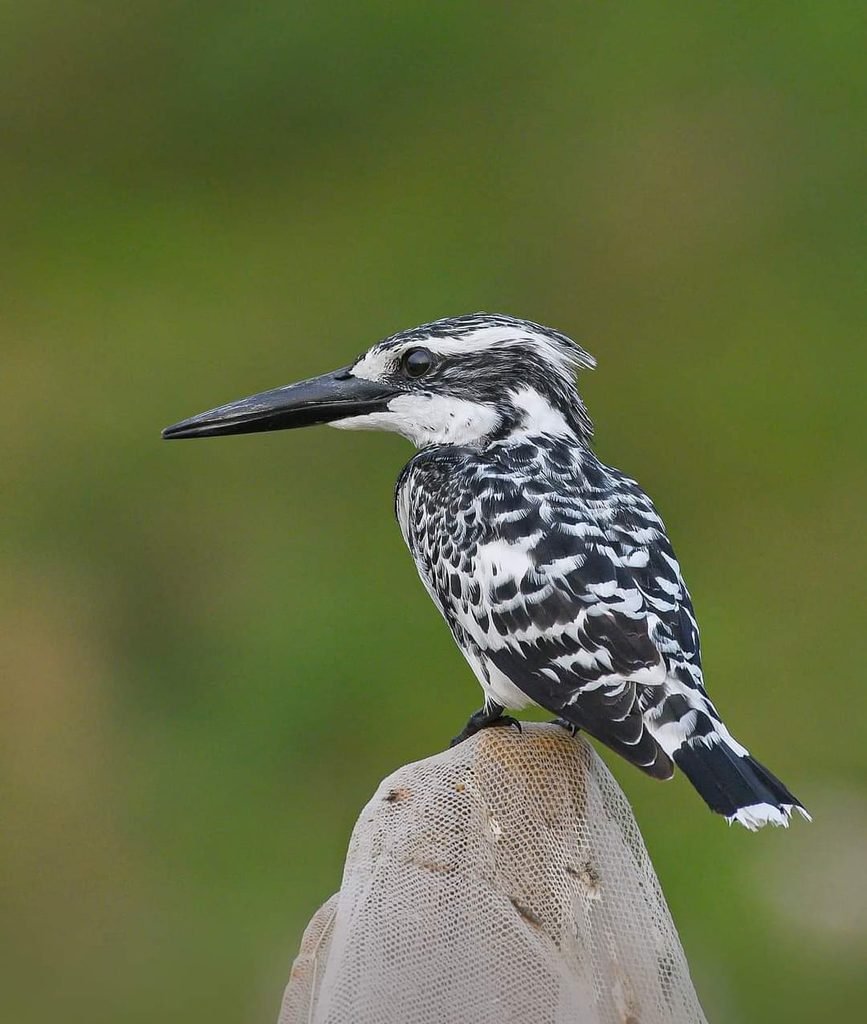
The Black-capped Kingfisher is a colorful kingfisher associated with coastal habitats, mangroves, creeks, and waterways. Its striking plumage can make it a rewarding discovery during a Sundarban boat safari, especially for photographers. The bird often uses a branch or another elevated perch as a lookout. From there, it can watch the water and suddenly dive toward suitable prey. Fish and other aquatic animals can form part of its diet, while it may also take insects and small creatures. Because kingfishers can remain still before making a very fast movement, visitors should watch branches along the creek banks carefully. A quiet boat ride through the mangroves can provide a good opportunity to observe this attractive bird in its natural habitat.
15. White-throated Kingfisher
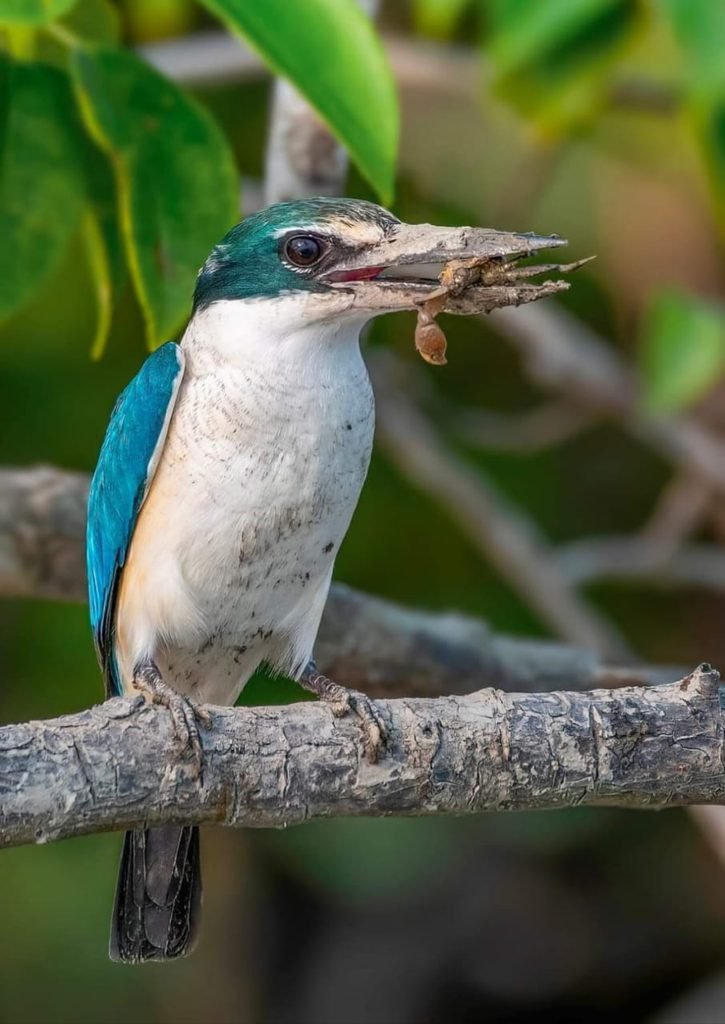
The White-throated Kingfisher is one of the most familiar and colorful kingfishers you may encounter in and around the Sundarbans. Its bright blue wings and back, brown head, and contrasting white throat make it particularly easy to recognize. Although its name connects it with fishing, this adaptable bird does not depend only on fish. It may hunt frogs, insects, crabs, and other small animals as well. It often waits on a suitable perch before making a quick flight toward prey. During a Sundarban trip, keep an eye on branches, poles, fences, and vegetation near waterways. Its vivid colors can make a sudden appearance especially exciting for visitors carrying a camera.
Best Way to Spot Fishing Birds in the Sundarbans
The best opportunities for birdwatching usually come during a boat safari through the mangrove waterways. Keep your eyes on exposed branches, muddy banks, creek edges, sandbars, and open water.
Early morning and late afternoon can be particularly rewarding because birds are often actively feeding. Carry binoculars, a camera with a zoom lens, a hat, sunscreen, and plenty of drinking water.
And remember: maintain a respectful distance from wildlife and avoid loud noises. The quieter your boat is, the better your chances of observing birds behaving naturally.
Tips for Spotting Fishing Birds on a Sundarban Trip
- Keep binoculars or a camera with a good zoom lens ready.
- Watch the branches along creeks, riverbanks and open water.
- Early morning and quieter periods of the boat journey can be excellent for birdwatching.
- Avoid loud noises and sudden movements around wildlife.
- Maintain a respectful distance and never disturb a bird for a photograph.
Why Birdwatching Makes a Sundarban Trip Special
The Sundarbans is much more than a tiger destination. Its mangrove forests, tidal waterways and wetlands support a remarkable variety of birds. A slow boat ride can bring sightings of kingfishers as well as herons, storks, egrets, raptors and many other wetland species.
So, while you are looking for the famous Royal Bengal Tiger, remember to look at the branches and waterways too. A brightly coloured kingfisher appearing beside your boat can become one of the most memorable moments of your Sundarban adventure.
Sundarbans with Banalata Travels
Planning a Sundarban trip? Banalata Travels can help you explore the mangrove waterways and experience the rich wildlife of this unique ecosystem.
Whether you are a birdwatcher, wildlife photographer, nature lover or simply looking for an unforgettable getaway, keep your binoculars ready and enjoy the beauty of the Sundarbans from the water.